
This link will open in a new tab and lead to an external website. We are not responsible for its content or availability.
Micro-learning resource 1: Choosing the right social media platforms
Theoretic section
To choose the right social media platform for one’s business, first it is important to understand the enterprise’s type of service, goals and target audience. Some businesses have more than one social media profile, depending on the aim they are pursuing: a platform like LinkedIn helps getting in contact with other businesses and professionals, while Facebook has a broader target audience. Following there are some social media examples and their characteristics.
Facebook is suitable for reaching a broad and diverse public, making it effective for brand awareness, promotions, customer service, and Business to Customer (B2C) communication. Instagram focuses on visual storytelling through images, stories, and reels, attracting mainly younger users (18-40) and helping brands strengthen their visual identity and emotional connection with audiences.
X (ex-Twitter) is centred on real-time updates and short content, widely used by journalists and professionals, making it ideal for Public Relations (PR), trend engagement, and rapid customer interaction. YouTube specializes in short and long-form video content, such as tutorials and presentations, supporting both B2C and Business to Business (B2B) communication through product explanations and storytelling.
LinkedIn is a professional networking platform aimed at entrepreneurs and B2B audiences, useful for industry insights, employer branding, and building credibility. Finally, TikTok targets mainly young users (14-35) with short, creative videos, offering strong potential for virality, visibility, and engagement through entertaining and immediate content.
Lastly, to start posting on social media, keep in mind you have to:
Supporting resource
|
Platform |
Type of content |
Target audience |
Main goals |
|
|
Informative posts, links, videos, events, offers, community content |
Wide audience (25–65+), B2C |
Brand awareness, engagement, promotions, customer service |
|
|
Visual content, pictures, Reels, Stories. |
Young adults (18–40), visual-oriented users |
Visual branding, product display, engagement, identity building |
|
YouTube
|
Long videos, tutorials, demos, training, storytelling |
Wide public, B2B/B2C |
Product education, brand authority, trust, stable traffic |
|
|
Professional articles, insights, company updates, job offers |
Professionals, enterprises and entrepreneurs, B2B |
Networking, lead B2B, reputation, employer branding |
|
X (ex-Twitter)
|
Short news items, updates, comments on trends, quick communications |
Journalists, users interested in current matters |
PR, fast customer service, visibility on news, brand voice |
|
TikTok
|
Short videos, creative, trends, challenges, authentic content |
Young people (14–35), brand lifestyle |
Viral reach, engagement, reaching young audiences |
Reflection time
Take your time to reflect on the following questions:
Check your answers with the table to identify the most suitable social media platforms for your business.
5.2. Micro-learning resource 2: Content strategy and green marketing
Theoretic section
To create a solid and consistent identity, sustainability must be incorporated into a long-term content strategy. Some useful tips are:
To promote a sustainable business, a sustainable marketing is needed too. Sustainable marketing prioritises people and the planet, which are the central themes of its initiatives, it takes into account all aspects of sustainability (environmental, social and economic factors) and it shapes the world of contemporary marketing by redefining objectives and strategies with the aim of having a positive social and environmental impact.
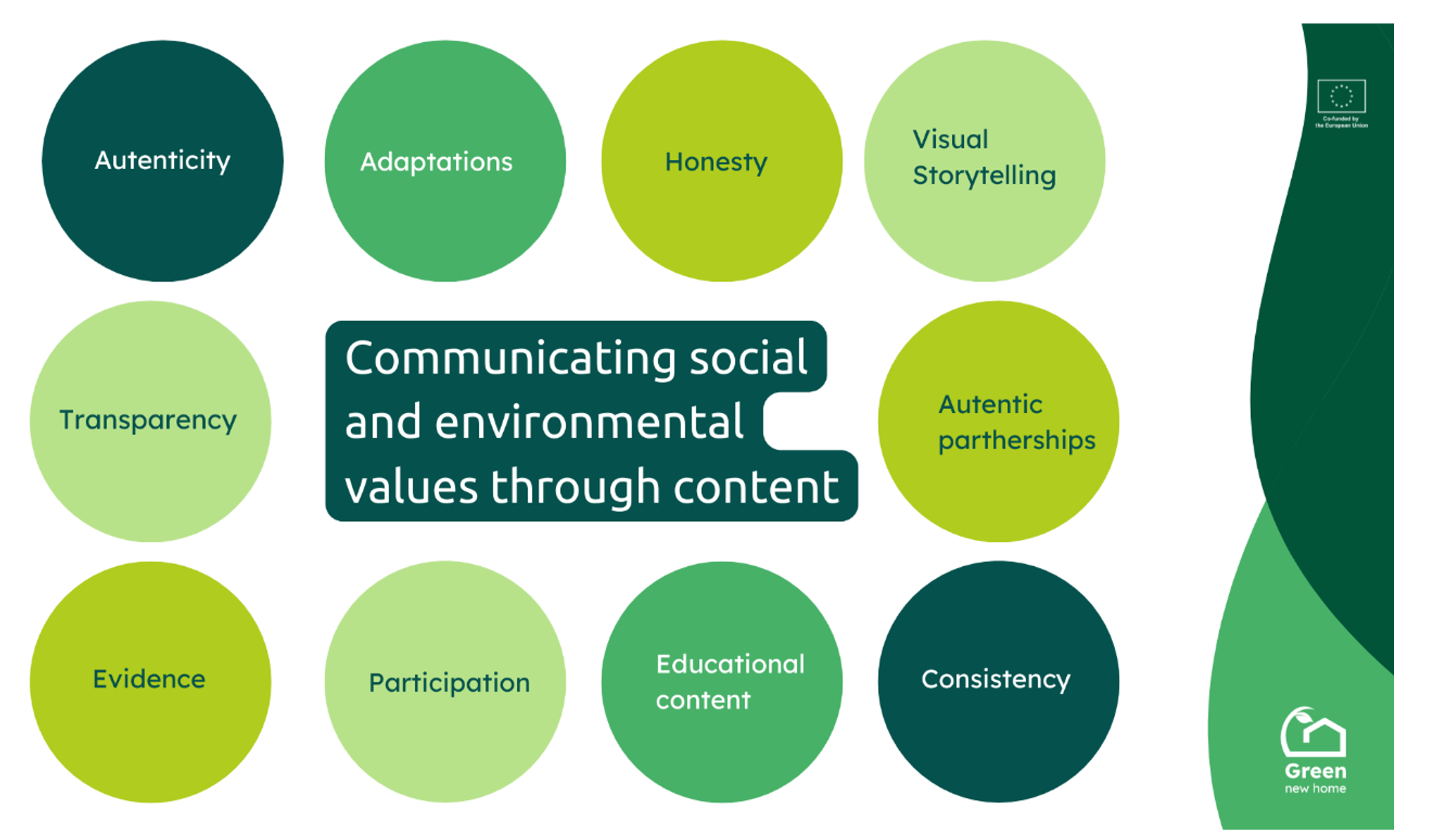
To communicate social and environmental values authentically through content a few key elements must be kept in mind:
For more content on marketing, you can consult Unit 1 of the module on Entrepreneurship & Marketing.
Supporting resource
Reflection time
Open your notes app or take some paper and a pen to answer the following questions:
This way, you can start to create the foundation of your sustainability content strategy.
5.3. Micro-learning resource 3: Performance Indicators and Social Media Analytics
Theoretic section
Those involved in sustainable entrepreneurship can use key performance indicators to measure and achieve a better environmental, social and governance impact. These indicators are essential for improving digital content, ensuring that it is in line with sustainability goals and can inspire an audience that is aware of environmental issues.
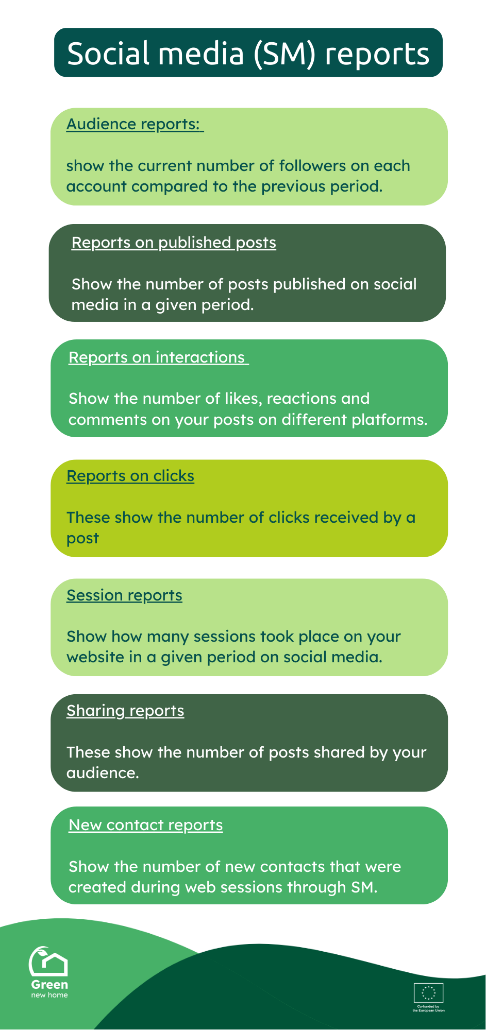
Specifically, using social media traffic monitoring data allows entrepreneurs to create engaging content that has a lasting impact on the customers. These reports provide an overview of specific data and metrics, such as engagement and impressions, related to the content you share on social media. Engagement metrics include likes, shares, comments, and other interactions on social media. It’s important to analyse this data to understand the audience's preferences and create content designed to improve interactions. A high level of engagement is usually associated with customer loyalty and word of mouth.
So, it is necessary to monitor the business’s social media presence in order to:
Read the following infographic to know what type of data you can find through your social media activity:
Supporting resource
Reflection time
Take your time to reflect: have you ever witnessed the growth of a business on social media? Have you ever considered the impact that social media can have on you, as a consumer?