This link will open in a new tab and lead to an external website. We are not responsible for its content or availability.
Section 1: The Circular Economy vs. Linear Economy
To lead the green transition, businesses must fundamentally rethink how they view resources. The shift from a linear to a circular model is not just an environmental imperative; it is a vital strategy for long-term business resilience and profitability.
The Linear Economy (The Vulnerable Model): For decades, the global economy has operated on a "take-make-dispose" model. We extract raw materials (take), manufacture products (make), and throw them away when they are no longer wanted or broken (dispose).
The Circular Economy (The Resilient Model): The circular economy aims to "close the loop" by keeping materials in use at their highest value for as long as possible, and designing out waste entirely from the very beginning. It is not just about doing less harm; a core principle is actively regenerating natural systems (e.g., using biodegradable packaging that returns nutrients to the soil).
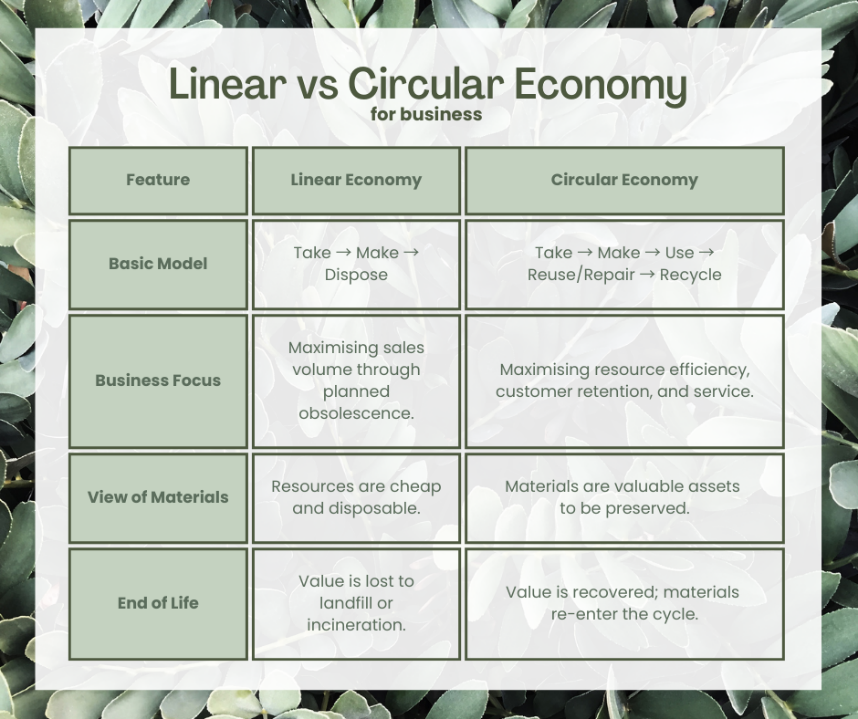
Source: Canva
Reflection: Look at an object near you. When it breaks, can it be repaired, or does it have to be thrown away? Think about how the manufacturer designed it – is it sealed shut with glue, or does it have accessible screws and modular parts for easy repair?
Section 2: Waste Reduction Strategies
Effectively managing resources means prioritising how we handle potential waste. The way a business handles waste directly impacts its bottom line. Not all waste reduction strategies are created equal.
Refuse & Reduce (The Most Effective Steps): This is the most preferred step in waste management. Refusing unnecessary materials or reducing waste at the source is always better than trying to manage waste after it has been created. If you don't generate the waste, you eliminate the cost of buying it and the cost of disposing of it.
Reuse & Repair (Resource Efficiency): Keeping items in their original form for as long as possible is a key green practice. With movements like the EU's "Right to Repair" gaining momentum, businesses that offer repair services or durable goods have a competitive advantage.
Recycle (The Last Resort): While highly visible, recycling should be the last resort among these three strategies. It requires significant energy to break down materials and remake them (sometimes called downcycling, where the material loses quality).
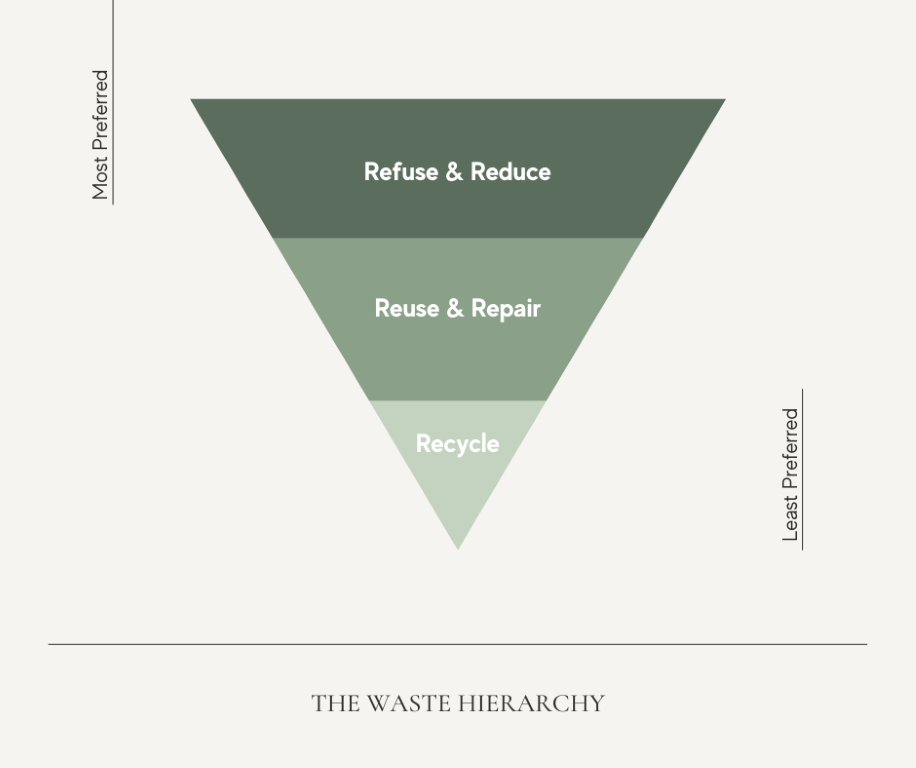
Source: Canva
Reflection: What is one single-use item you use daily in your business (e.g., disposable coffee cups, excessive shipping tape, printed meeting agendas) that could be replaced with a reusable or digital alternative starting tomorrow?
Section 3: Sustainable Production Methods
Sustainable production focuses on maximising operational efficiency while aggressively reducing the ecological footprint. The goal is to produce goods while preserving natural capital.
Using Renewable Energy & Maximising Efficiency: The greenest energy is the energy you do not use. Upgrading to energy-efficient machinery and LED lighting is the first step. The next is transitioning manufacturing and operational facilities away from fossil fuels. Utilising on-site solar panels or purchasing wind power from the grid directly reduces a company's greenhouse gas emissions.
Sourcing Raw Materials Responsibly: A business is only as sustainable as its supply chain. This involves tracing materials back to their origin to ensure they do not contribute to deforestation, habitat destruction or poor labour conditions.
Minimising Water Usage in Production: Industrial processes, especially in textiles, agriculture, and manufacturing, consume vast amounts of freshwater. Sustainable production requires rethinking water as a precious resource rather than an infinite utility.
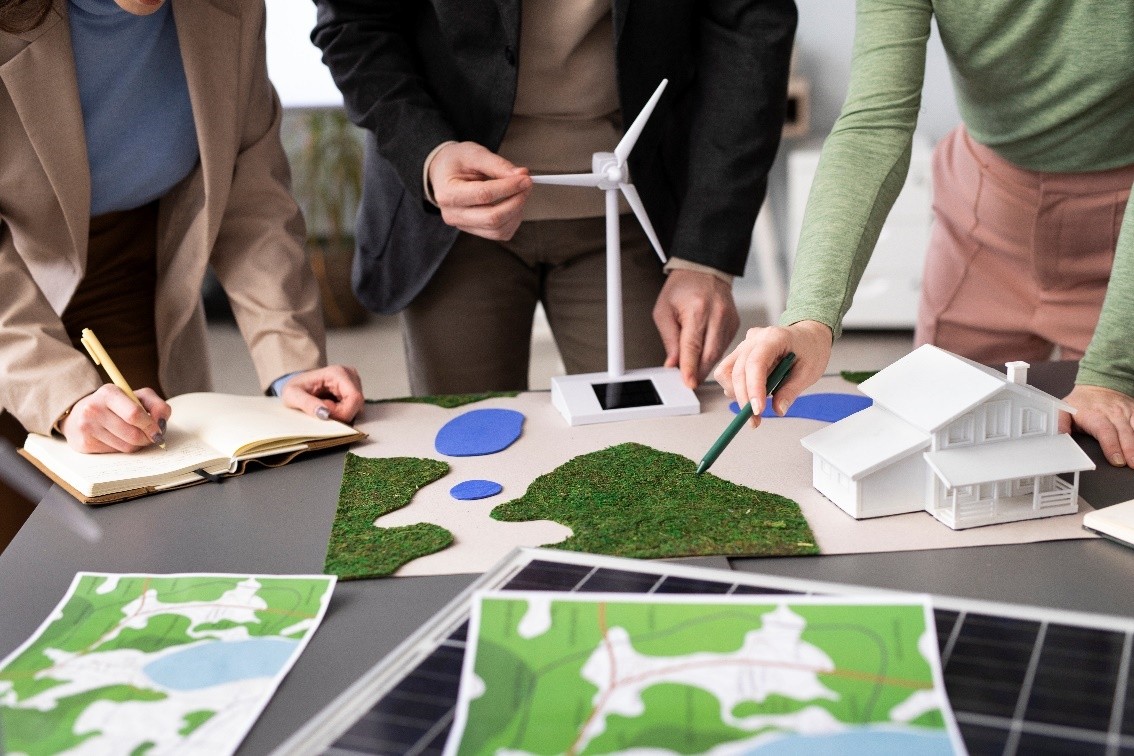
Source: Freepik
Reflection: If you were making t-shirts, how would you ensure the water used (especially the toxic chemicals in the dyeing process) doesn't pollute local rivers? What physical systems or supplier agreements would you need to put in place?


